Every living cell is covered in a dense layer of sugars. Drugs, viruses, other cells, and signaling molecules often encounter this layer first.
Unlike DNA, RNA, and proteins, these sugars aren't directly encoded by a template. They're branched, assembled by competing enzymes, and wildly variable. Even a six-sugar chain can take more than a trillion forms. There is no equivalent of a sequencer for them. So the knowledge and expertise have stayed scattered, and glycobiology has remained the dark matter of biology.
Epimer is unscattering glycobiology evidence. We're building agents that reason over it, interpret glycan data, drive drug discovery, and equip frontier research. Biology's fourth alphabet is finally ready to be read.
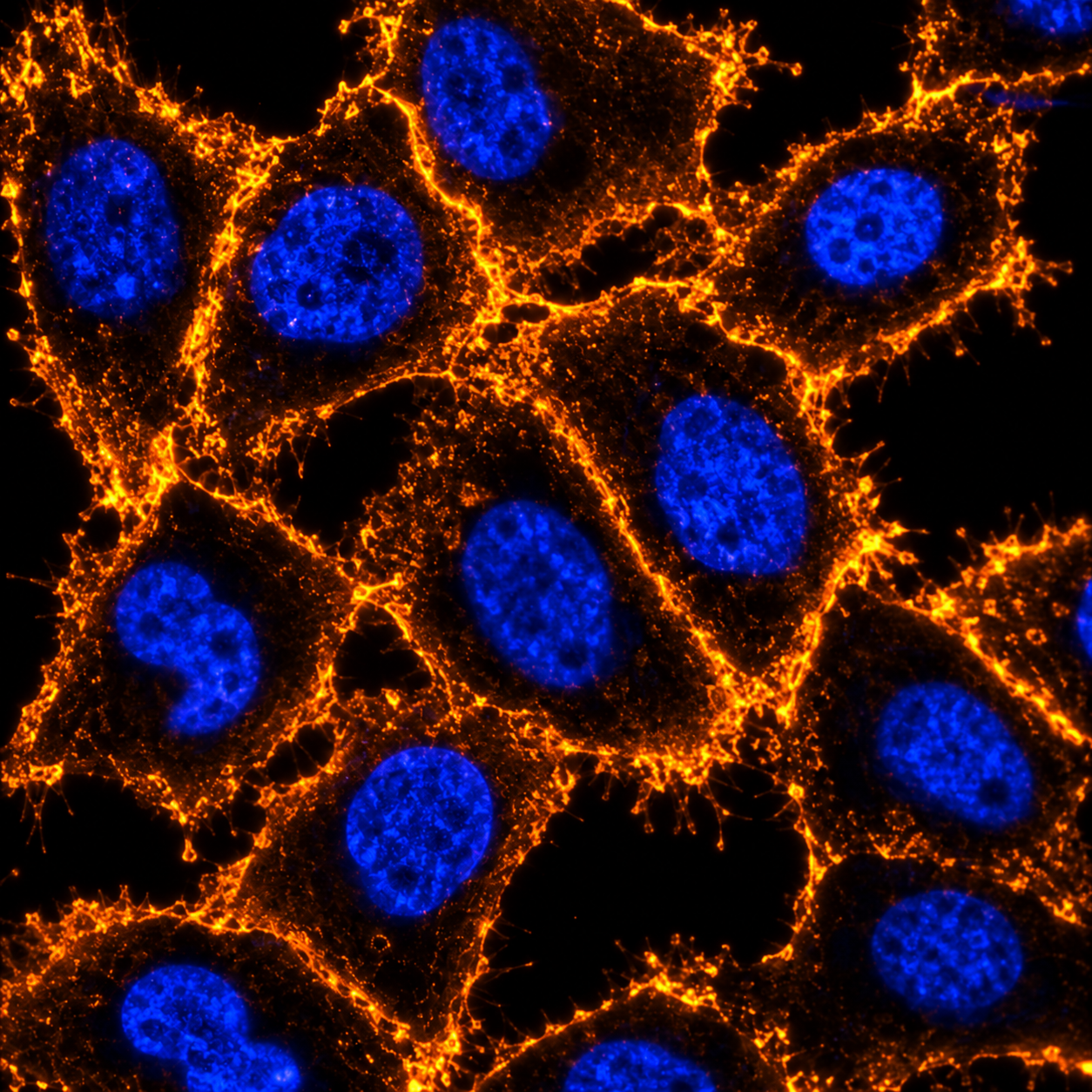
of cells carry covalently attached sugars, without known exception
possible structures for one 6mer sugar, orders of magnitude > a 6mer peptide*
*Laine, Glycobiology 1994
most abundant biopolymers on Earth are cellulose and chitin, both glycans
Want to read more about glycobiology? Here's where you can start:
- Chemical Glycobiology. Bertozzi & Kiessling. Science, 2001.
- Biological roles of glycans. Varki. Glycobiology, 2017.
- Essentials of Glycobiology, 4th edition. Cold Spring Harbor, 2022.
Drug discovery engine
Banting & Best
In 1921, Frederick Banting and his student Charles Best isolated insulin. Within two years it was in patients, scaled into manufacture with Eli Lilly. Best went on to help turn heparin into an injectable drug.
A century later, both these examples of the earliest glycotherapeutics are still on the shelf of every hospital in the world.
Banting & Best is a drug discovery engine for glycobiology. A team of specialist agents reason together over a curated evidence layer of targets, enzymes, structures and trials, and show their working line by line.
Thank you, we'll be in touch.
Access is going out in small batches.
Research workbench
Meyer & Landsteiner
Karl Meyer helped define and name the glycosaminoglycan family and co-discovered hyaluronic acid. Karl Landsteiner discovered blood groups — these were dictated by antibodies against cell-surface sugars.
Meyer & Landsteiner bring glycobiology to your bench: a multi-agent research workbench built for every research laboratory in the world. Ask them questions about structures, enzymes, binding data, and the literature where it contradicts itself!
Thank you, we'll be in touch.
You'll hear from me before anyone else does.
Who's building this
Chirag Dhar
Co-founder
Physician-scientist and glycobiologist. Trained as a postdoctoral fellow in Ajit Varki's laboratory. Early employee at Carolyn Bertozzi's (2022 Nobel Prize in Chemistry) glycoproteomics startup, InterVenn Biosciences, with two pending patents arising from this work. Multiple glycobiology publications spanning fundamental biology, clinical trials, cancer, sepsis, vascular biology, COVID-19, and infectious diseases in British Journal of Cancer, PNAS, The Lancet Regional Health – Southeast Asia, Glycobiology, and other journals. Biopharma experience across drug development, with specialty training in pharmaceutical medicine.
Open
Co-founder
You build things end to end in Python. You've run LLM agents in production (orchestration, retrieval, evals) long enough to know where they break, and where they don't. You don't need to know glycobiology. You do need to be excited by the thesis. A first-principles approach to engineering problems is highly valued.
If the above landed with you, write to me.